The Weakest Pane: Why Ordinary Window Glass Gives Up Early in a Fire — And What Replaces It
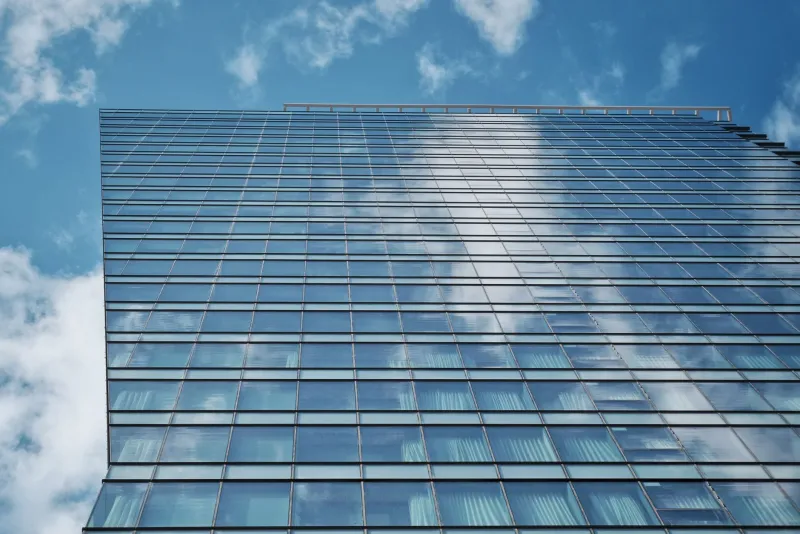
In the vocabulary of fire protection, walls and doors get most of the attention. Windows rarely come up — and that's an oversight with consequences. Ordinary annealed glass, the kind installed in the overwhelming majority of American homes, begins to soften and crack at temperatures around 250 to 350 degrees Fahrenheit at the pane's edge. A developing structure fire exceeds 1,000 degrees within minutes. When the glass goes, the opening it covered becomes an unrestricted channel for oxygen and a doorway for embers.
Firefighters have a name for the result: the fire gets a new breath, and the house next door gets a new problem.
How Fire-Rated Glazing Actually Works
Two technologies dominate the commercial market.
Ceramic glazing uses a glass-ceramic material with a coefficient of thermal expansion near zero. Where ordinary glass shatters when one side heats faster than the other, ceramic glass absorbs the differential without fracturing. It's the same family of material used in cooktops — transparent, rigid, and indifferent to thermal shock.
Intumescent glazing takes a different route. A clear gel interlayer sits between panes of specially treated glass. When exposed to fire, the interlayer foams into an opaque, insulating char that blocks heat transfer, protecting whatever is on the far side. Beyond simply staying in place, this type of glazing actively slows the fire's radiated heat — critical in applications where occupants need protected egress time.
Both are rated to standards such as UL 9 and ASTM E119, tested in full assemblies with the frames and glazing systems they'll actually be installed in.
The Residential Gap
So why doesn't your house have any of this? Cost and code, mostly. The International Residential Code does not require fire-rated glazing in typical single-family construction, and a fire-rated window assembly can run five to ten times the price of a standard unit. Commercial buildings get them because occupancy codes demand them; homes don't because nothing does.
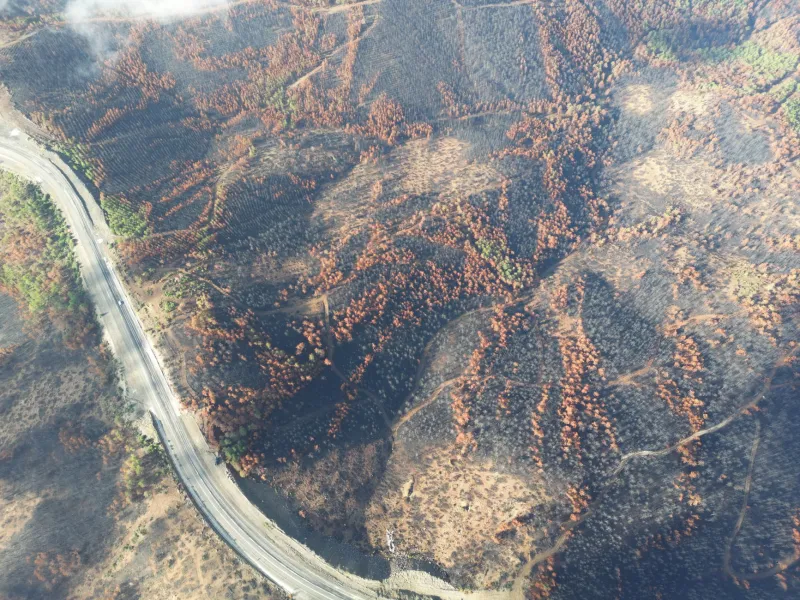
In wildfire-prone regions, however, the calculus is shifting. Post-fire investigations in California, Colorado, and Oregon repeatedly identify glazing failure as an early point of ember and flame entry. California's Chapter 7A wildland-urban interface standards already mandate tempered glass in WUI zones — a meaningful step up from annealed glass, since tempered panes resist thermal stress roughly four times longer. Full ceramic or intumescent units go further still.
Is Retrofitting Worth It?
For most homeowners, a full retrofit of every window is hard to justify on fire protection alone. A more strategic approach targets the vulnerable points:
- Windows near attachments. Attached garages, decks, and fences are common ember pathways to the structure.
- Paired windows close to property lines or neighboring structures — a common radiant-heat exposure scenario.
- Large single panes, which fail faster than smaller, divided lites.
For homeowners in designated WUI zones, pairing fire-rated glazing in high-exposure locations with tempered glass elsewhere, non-combustible exterior shutters, and defensible-space landscaping forms a coherent system rather than a collection of purchases.
A Material Whose Time Is Coming
Fire-rated glazing has spent decades as a commercial-building specialty. As wildfire seasons lengthen and suburban development keeps pressing into the interface, the residential market is beginning to pull it inward. The glass has always been capable. It's the demand that's finally catching up.