When the Basement Floods, the Fire Risk Follows: The Sump Pump Failure Crisis Hiding Beneath American Homes
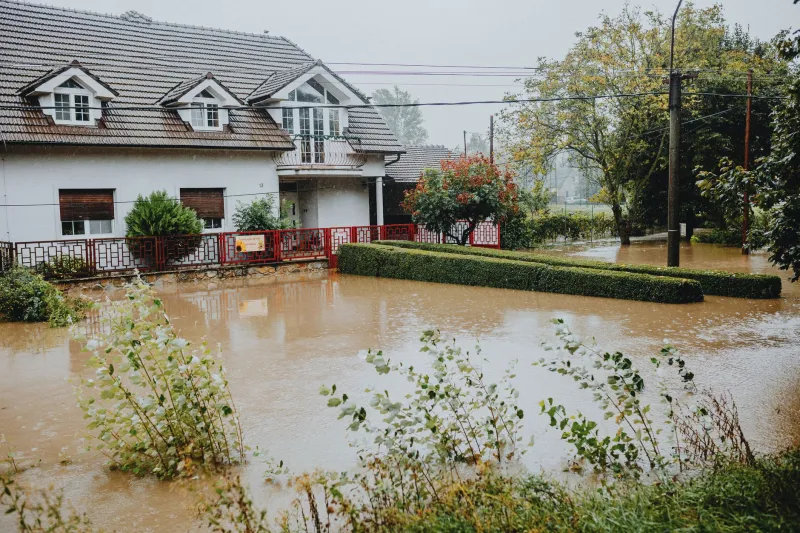
The average American homeowner keeps a fire extinguisher in the kitchen, tests the smoke detectors twice a year, and perhaps installs a carbon monoxide alarm near the bedroom. What few consider is the mechanical device humming quietly in the basement corner—the sump pump—and the chain of catastrophic consequences that unfolds when it stops working. Water management failure is not merely a structural inconvenience. It is, in many documented cases, a precursor to the very fire risks that most households spend years trying to prevent.
A System Designed for Crisis, Rarely Maintained for It
Sump pumps are engineered to activate precisely when conditions are worst: during heavy rainfall, rapid snowmelt, or storm surges that overwhelm municipal drainage. They are, by design, emergency devices. Yet the majority of American homeowners treat them as passive infrastructure—installed once and largely forgotten until the moment they are needed most.
According to industry surveys, the average sump pump has a functional lifespan of seven to ten years. In regions across the Midwest, Mid-Atlantic, and Pacific Northwest—areas particularly susceptible to seasonal flooding—many systems in service today were installed well before that threshold. Mechanical components degrade silently. Float switches corrode. Check valves lose their seal. The motor strains against sediment accumulation it was never designed to process indefinitely.
The result is a failure mode that arrives without warning, typically during the precise meteorological event the device was built to manage.
The Electrical Dimension: Where Water and Fire Converge
When a sump pump fails and a basement floods, the most immediate and underappreciated hazard is electrical. Residential basements house a dense concentration of powered infrastructure: electrical panels, water heaters, HVAC systems, laundry appliances, and an expanding array of home technology equipment. Many of these systems sit at or near floor level.
Standing water in contact with energized outlets, junction boxes, or appliance wiring creates conditions for arc faults—uncontrolled electrical discharges that generate intense, localized heat. Arc faults are among the leading causes of residential fires in the United States, responsible for an estimated 30,000 home fires annually according to the U.S. Fire Administration. Flood-induced arc faults carry a particular danger: they often occur within wall cavities or beneath flooring, where the ignition point is concealed from view and far from any detection device.
Further compounding the risk, submersion damage to electrical components does not resolve when the water is removed. Moisture trapped within wiring insulation, panel enclosures, and outlet boxes continues to degrade protective materials over weeks and months. Homeowners who pump out a flooded basement and consider the matter resolved may be living above a slowly deteriorating electrical system that will eventually fail—often under load, and often at night.
Mold as a Fire Accelerant: The Chemistry Homeowners Overlook
The connection between mold growth and fire risk is not intuitive, but it is well-established in building science. When organic structural materials—wood framing, cellulose insulation, OSB sheathing—remain saturated for 24 to 48 hours, microbial colonization begins. Mold does not merely discolor surfaces or trigger respiratory illness. It actively degrades the structural integrity of the materials it inhabits.
Wood framing weakened by fungal decay loses both its load-bearing capacity and its resistance to combustion. Healthy, dense lumber burns more slowly and retains structural integrity longer during a fire, buying critical minutes for evacuation and suppression. Mold-compromised framing burns faster, collapses sooner, and produces a more chaotic fire progression. For firefighters operating inside a structure, this distinction can be the difference between a controlled suppression effort and a catastrophic structural failure.
The Environmental Protection Agency recommends that any building material remaining wet for more than 48 hours be evaluated for mold remediation. In a flooded basement where a failed sump pump allowed water to stand for days, the remediation requirements extend far beyond what most homeowners anticipate—and far beyond what a shop vac and a dehumidifier can address.
Backup Systems: The Technology Gap in American Homes
The engineering solutions to sump pump failure exist and are widely available. Battery backup sump pumps, water-powered backup systems, and combination units with integrated alarm technology have been on the market for years. Yet adoption rates remain low, particularly in older housing stock.
Battery backup systems activate automatically when the primary pump loses power—the most common failure scenario during the severe storms that cause flooding in the first place. These systems typically provide four to seven hours of continuous operation on a fully charged battery, sufficient to manage most acute flooding events until power is restored or emergency services arrive. More sophisticated units include Wi-Fi-connected sensors that alert homeowners via smartphone when water levels rise, when the primary pump fails, or when battery charge drops below a functional threshold.
Water-powered backup systems, which operate using municipal water pressure rather than electricity, offer a different redundancy profile—they are unaffected by power outages but depend on adequate water pressure and generate wastewater that must be managed within local plumbing codes.
For homeowners in high-risk flood zones, the investment in a dual-redundancy system—primary pump, battery backup, and water sensor with remote alerting—represents one of the most cost-effective protective measures available, particularly when weighed against the downstream costs of electrical remediation, mold abatement, and structural repair.
Emergency Preparedness Requires a Broader Definition
The conventional framing of home fire safety focuses on ignition sources: faulty wiring, unattended cooking, improperly stored flammables. This framework is accurate but incomplete. A flooded basement that goes unaddressed for 72 hours can transform a structurally sound home into one that is primed for accelerated fire progression, difficult to suppress, and dangerous to occupy.
Emergency preparedness professionals increasingly advocate for what some call a cascading hazard model—an approach that maps how one system failure creates vulnerability in adjacent systems. A sump pump that fails during a storm does not merely flood a basement. It initiates a sequence: electrical exposure, material saturation, microbial growth, structural degradation, and elevated combustion risk. Each step in that sequence is preventable, but only if the homeowner understands that the chain exists.
Homeowners are encouraged to schedule annual sump pump inspections, test float switches manually before storm season, verify that discharge lines are clear and properly directed away from the foundation, and assess whether their current system includes any form of backup protection. Local building inspectors, licensed plumbers, and certified home inspectors can all provide baseline evaluations.
The Basement as a Safety Priority
American homes are, in many respects, better protected against fire today than at any point in the past century. Smoke detectors, fire-resistant construction materials, arc-fault circuit interrupters, and improved building codes have collectively reduced residential fire fatalities substantially. But the systems that govern water management have not received the same level of safety scrutiny.
The basement is where water and electricity converge, where structural materials meet the soil, and where a single mechanical failure can initiate a hazard sequence that no smoke detector is positioned to catch. Treating the sump pump as a peripheral concern—something to address after the water arrives—is a posture that leaves households exposed to risks that are both predictable and preventable.
Built to withstand means accounting for every threat vector, including the ones that start with rain.