Draped in Danger: The Flammability Crisis Hiding in Plain Sight Across American Living Rooms
When fire investigators walk through the aftermath of a residential blaze, they frequently note the same pattern: the fire did not simply burn — it traveled. It moved from one soft surface to another, accelerating along pathways that homeowners never considered threatening. Mattresses and upholstered sofas have received considerable public scrutiny in recent years, prompting at least partial regulatory attention. Yet the broader universe of household textiles — the curtains pooling near a candle, the synthetic area rug anchoring a living room, the decorative throw pillows stacked on a window bench — remains almost entirely outside the reach of meaningful federal flammability standards.
This is not a peripheral concern. According to data compiled by the National Fire Protection Association, home furnishings and soft goods are consistently among the leading contributors to fire spread and civilian casualties in residential structure fires. The problem is not merely ignition; it is propagation. A flame that might be contained by a fire-resistant surface instead finds fuel in loosely regulated textiles and moves with alarming speed.
What the Regulations Actually Cover — and What They Don't
Federal flammability regulation in the United States is narrower than most consumers assume. The Consumer Product Safety Commission enforces flammability standards for mattresses under 16 CFR Part 1633, and children's sleepwear carries its own set of requirements. Beyond those categories, the regulatory landscape becomes sparse.
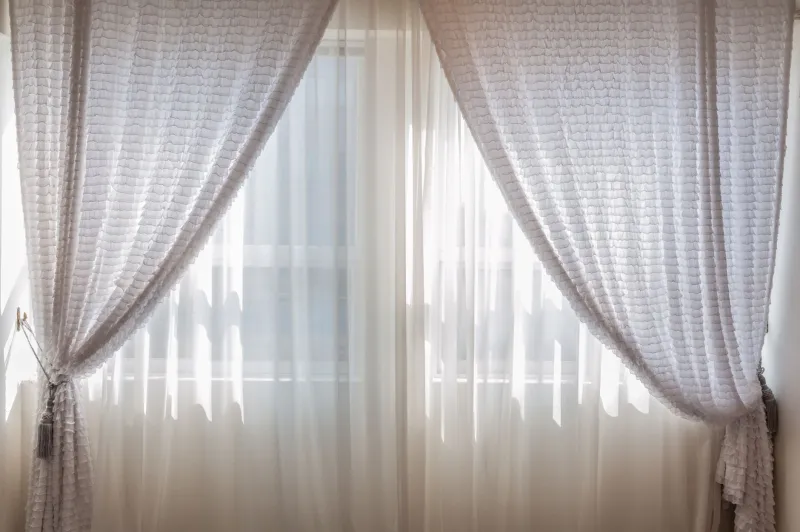
Curtains and draperies sold for residential use are not subject to mandatory federal open-flame performance standards. Area rugs and carpets face surface flammability requirements under 16 CFR Part 1630 and 1631, but those standards were designed primarily to address smoldering ignition from cigarettes — not the rapid flame spread that characterizes modern residential fires. Decorative throw pillows, upholstered wall panels, and fabric wall hangings exist in a near-total regulatory vacuum.
California has historically led the country in pushing stricter standards, but even the state's Title 19 and Technical Bulletin frameworks focus largely on commercial and institutional environments. The American household, for all practical purposes, remains an unregulated frontier.
The Science of Rapid Textile Combustion
Understanding why this matters requires a brief examination of combustion chemistry. Synthetic textiles — polyester, nylon, acrylic, and polypropylene — are petroleum derivatives. When exposed to an open flame or sufficient radiant heat, they do not simply burn; many melt, drip, and release flammable gases that feed the fire even as the original material deforms. This behavior is fundamentally different from natural fibers like untreated cotton or linen, which tend to char and smolder rather than propagate flame aggressively.
The situation is further complicated by fabric construction. Lightweight, loosely woven materials present a large surface area relative to their mass, allowing oxygen to interact with combustible fibers efficiently. A sheer polyester curtain hanging beside a window can ignite and spread flame vertically in a matter of seconds — a phenomenon fire scientists refer to as "curtain flaming" — carrying fire upward toward structural elements before occupants have time to respond.
Throw pillows and decorative cushions introduce yet another variable: fill material. Many are stuffed with polyester fiberfill, which burns rapidly and can release toxic combustion byproducts including carbon monoxide and hydrogen cyanide. Area rugs with synthetic backing materials compound the hazard further, particularly in homes with open floor plans where a burning rug can serve as a horizontal fire bridge between rooms.
The Awareness Problem
Industry surveys and consumer research consistently reveal that Americans dramatically underestimate the flammability of common home textiles. A 2022 survey conducted by a national home safety advocacy organization found that fewer than one in five respondents believed their curtains posed a meaningful fire hazard, and fewer than one in ten had ever considered the flammability characteristics of decorative throw pillows when making a purchase.
This awareness gap is not accidental. Retailers have little commercial incentive to advertise flammability risks associated with products they sell, and manufacturers operating in an unregulated space face no labeling requirements that would compel disclosure. The result is a marketplace where fire-resistant properties, when they exist at all, are treated as premium selling points rather than baseline expectations.
Fire safety educators and residential fire investigators have been raising these concerns for years. The challenge is translating technical knowledge into consumer behavior change in the absence of regulatory mandates that would force the issue at the point of sale.
Manufacturers Quietly Raising the Bar
Despite the regulatory vacuum, a growing cohort of manufacturers is engineering fire-resistant textile alternatives — and finding a market among safety-conscious consumers, architects, and interior designers working on high-end residential projects.
Several companies have developed inherently flame-resistant drapery fabrics using modacrylic fiber blends, which resist ignition without relying on chemical treatments that can degrade over time or wash out. Unlike topically applied flame retardants — which carry their own toxicological concerns and diminish with repeated laundering — inherently fire-resistant fibers maintain their protective properties throughout the product's lifespan.
In the area rug and carpet segment, manufacturers producing wool-blend products have highlighted wool's naturally superior fire performance: the fiber requires significantly higher temperatures to ignite, tends to self-extinguish rather than propagate flame, and produces comparatively low levels of toxic combustion gases. Some producers are now explicitly marketing these properties to consumers seeking alternatives to synthetic floor coverings.
For throw pillows and decorative cushions, a smaller number of specialty manufacturers have introduced products filled with inherently fire-resistant materials, including treated natural fibers and engineered synthetic fills designed to char rather than melt. These products remain a niche segment, but their availability signals that market demand — however modest — is beginning to influence product development.
What Consumers Can Do Now
In the absence of comprehensive regulation, the burden of protection falls substantially on individual consumers. That is an imperfect arrangement, but it is the current reality — and there are practical steps available.
Prioritizing natural fiber curtains and draperies, particularly wool or tightly woven cotton, over lightweight synthetic alternatives represents a meaningful risk reduction for most households. Positioning window treatments away from open flames, candles, and heat-producing appliances addresses the ignition pathway directly. For area rugs, wool-blend products offer measurably better fire performance than all-synthetic options and are increasingly available at competitive price points.
Consumers renovating or furnishing new spaces should inquire specifically about flame-resistance certifications when purchasing upholstered wall panels or fabric-covered architectural elements. Products carrying California Technical Bulletin 117-2013 compliance documentation, while designed primarily for furniture, provide a reasonable baseline indicator of fire performance.
Perhaps most importantly, homeowners should evaluate their living spaces through the lens of fire propagation — not merely ignition. The question is not only whether a candle might fall over, but where a flame would travel if it did.
A Standard Whose Time Has Come
The regulatory conversation around household textile flammability is not new, but it has gained renewed urgency as residential fire patterns evolve. Modern homes burn faster than their predecessors, in part because they contain more synthetic materials and in part because open floor plans facilitate rapid fire spread. The window of survivable escape time has narrowed considerably over the past several decades.
Industry groups, fire safety researchers, and consumer advocates have periodically called for expanded federal standards covering residential draperies and soft furnishings. Progress has been slow, hampered by industry lobbying, jurisdictional complexity, and competing concerns about chemical flame retardant toxicity. The latter concern is legitimate — the solution to flammable textiles is not the indiscriminate application of hazardous chemicals — but it should not preclude standards that incentivize the development and adoption of inherently fire-resistant materials.
Until comprehensive standards arrive, the gap between what is available and what is typical remains wide. The materials to do better already exist. The question is whether the market — and eventually the regulatory framework — will demand them.