Invisible Ignition: The Commercial HVAC Maintenance Crisis Quietly Threatening America's Office Buildings
On the thirty-second floor of a mid-rise office tower in downtown Atlanta, a facilities manager conducting a routine quarterly inspection made a discovery that stopped him cold. The return air plenum—a large, pressurized cavity above the drop ceiling used to channel air back to the central HVAC unit—was coated in nearly two inches of compacted particulate debris. Lint fibers, paper dust, and what appeared to be degraded insulation fragments had accumulated over what maintenance logs suggested was an eighteen-month inspection gap. A single ignition source near that plenum, he later told colleagues, could have propagated fire through the entire floor in under four minutes.
His experience is not an outlier. It is, by many accounts, representative of a systemic problem embedded in the commercial real estate sector—one that building owners, tenants, and municipal fire codes have been slow to fully confront.
The Scale Problem That Residential Systems Don't Face
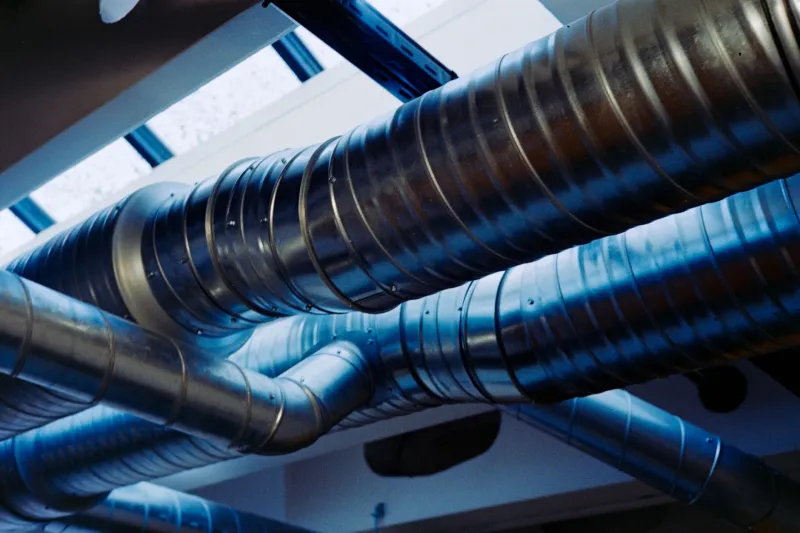
Residential HVAC systems, while not without their own fire hazards, operate at a fundamentally different scale. A home furnace or split-system air handler serves a single dwelling with a relatively compact network of ducts. Commercial systems, by contrast, are engineered to condition air across tens of thousands—sometimes hundreds of thousands—of square feet, distributing it through interconnected duct networks that traverse multiple floors, mechanical rooms, and ceiling cavities.
This architectural complexity creates what fire safety engineers refer to as an "extended ignition pathway." In a properly maintained commercial system, fire dampers—heat-activated barriers installed at strategic duct intersections—are designed to close automatically and interrupt flame travel. But fire dampers require periodic testing and inspection to function correctly. The National Fire Protection Association's NFPA 80 standard recommends inspection intervals of no more than four years for most fire dampers, yet industry surveys consistently suggest that a significant portion of commercial buildings in the United States fall outside of compliance.
When dampers fail to close—whether due to corrosion, debris obstruction, or mechanical fatigue—the duct network effectively becomes an expressway for fire and smoke.
Dust as a Primary Accelerant
The combustibility of accumulated duct debris is frequently underestimated by building operations personnel. In industrial settings, combustible dust is classified as a serious explosion and fire hazard by the Occupational Safety and Health Administration. Commercial office environments generate dust from a surprising range of sources: paper handling, printer toner particulates, textile fibers from carpeting and upholstered furniture, food particles from break rooms, and degraded insulation from aging ductwork components.
Over time, this material settles on the interior surfaces of return ducts and plenums. When an ignition event occurs—a failing motor bearing that overheats, an electrical arc near a duct penetration, or even a malfunctioning heating element—this accumulated debris can catch and sustain flame in ways that clean ductwork simply would not.
A fire protection engineer consulting for a Chicago-based property management firm described a scenario encountered during a client assessment: a rooftop air handling unit with a failed motor capacitor had been generating intermittent electrical arcing for an estimated three to five weeks before detection. The interior of the unit's supply plenum showed visible scorching. Had the debris load been heavier, or had the arcing occurred adjacent to a duct run rather than within a metal-enclosed unit, the outcome could have been substantially different.
The Maintenance Gap: Why It Persists
Commercial building maintenance operates within a complex web of responsibility. Property owners, management companies, tenants, and contracted mechanical service providers each carry a portion of the obligation—and that fragmented accountability frequently produces gaps.
Budgetary pressure is a consistent driver of deferred maintenance. HVAC servicing, particularly for large commercial systems, is expensive. Duct cleaning for a mid-size office building can run into tens of thousands of dollars. When capital expenditure budgets tighten, mechanical system maintenance is often among the first line items reduced or delayed.
Compounding the problem is a shortage of qualified commercial HVAC technicians in many US markets. The Associated Builders and Contractors has documented a persistent skilled trades workforce gap, and HVAC and refrigeration mechanics are among the roles most affected. When qualified personnel are scarce, inspection intervals stretch, and the institutional knowledge required to identify early warning signs of deteriorating components becomes harder to retain.
Regulatory enforcement adds another layer of inconsistency. Fire codes governing commercial HVAC maintenance vary significantly by jurisdiction. Some municipalities conduct rigorous inspections; others rely almost entirely on self-reporting by building operators. In jurisdictions where enforcement is light, the incentive structure for proactive maintenance weakens considerably.
What Deterioration Actually Looks Like
Facility managers who have encountered high-risk HVAC conditions describe a consistent set of warning indicators. Unusual odors—particularly burning or musty smells emanating from supply registers—are frequently the first sign that something is wrong within a duct system. Visible debris discharge from diffusers, unexplained increases in energy consumption, and erratic temperature distribution across a floor plate can all signal underlying mechanical problems.
More technically significant indicators include excessive vibration in air handling units, which can point to failing bearings or imbalanced fan wheels. Deteriorated flexible duct connectors—the short, accordion-style sections that link rigid ductwork to equipment—can develop tears or separations that allow hot surfaces or electrical components to come into proximity with combustible materials.
Belt-driven air handlers, still common in older commercial buildings, present a specific concern. A worn or misaligned belt running against a pulley generates friction heat. If the surrounding area has accumulated lint or dust, ignition risk is meaningful. Many facilities have transitioned to direct-drive systems precisely to eliminate this failure mode, but a substantial portion of the existing commercial building stock in the United States predates that transition.
Monitoring Technologies Entering the Space
The technology sector has begun responding to the commercial HVAC fire risk problem with a new generation of continuous monitoring platforms. These systems deploy sensor arrays within duct networks and mechanical rooms to track temperature anomalies, particulate concentrations, and airflow irregularities in real time.
Some platforms integrate with building management systems to flag conditions that deviate from established baselines—a sudden temperature spike in a return plenum, for instance, or a pattern of particulate readings that suggests debris accumulation has reached a threshold requiring intervention. A handful of providers have begun incorporating machine learning algorithms that analyze historical operational data to predict component failures before they manifest as emergency conditions.
Infrared thermal imaging, long used in industrial predictive maintenance programs, is also gaining traction in commercial building applications. Periodic thermal scans of electrical panels, motor housings, and duct surfaces can identify hot spots that would otherwise remain invisible until failure. Several large commercial property management firms have begun incorporating infrared inspection into their standard annual maintenance protocols.
These technologies do not eliminate the need for physical inspection and cleaning—no sensor replaces a technician who can physically assess the interior of a plenum. But they extend the window of visibility between inspections and provide facility managers with actionable data rather than requiring them to rely on scheduled intervals alone.
The Cost of Inaction
The consequences of neglected commercial HVAC maintenance extend well beyond property damage. Office fires displace workforces, destroy irreplaceable records, and in serious cases, cost lives. The economic disruption associated with even a non-fatal commercial fire—business interruption, liability exposure, insurance premium increases, and remediation costs—can be severe enough to threaten the financial viability of smaller building owners.
Insurance carriers are beginning to take note. A growing number of commercial property insurers are requiring documentation of HVAC inspection and cleaning records as a condition of coverage or renewal, a development that is slowly shifting the economic calculus for building operators who have historically treated mechanical maintenance as a discretionary expense.
The office buildings that populate America's downtown cores and suburban campuses are, in many respects, engineered to a high standard. Their structural systems, electrical infrastructure, and life safety features represent substantial investment. The HVAC networks that keep those buildings habitable deserve the same rigorous attention—not as a regulatory checkbox, but as a genuine commitment to the safety of the people who work within them every day.