Overlooked and Overdue: The Flammability Crisis Hidden in America's Pet Care Products
Every year, the United States Fire Administration records tens of thousands of residential fires in which the initial ignition source is well understood — a stove left unattended, a frayed electrical cord, a candle placed too close to a curtain. What those reports rarely capture with equal clarity is the role of secondary fuel loads: the materials already present in a home that determine how fast a fire grows once it starts. Among the most consequential of these secondary accelerants are products that millions of American pet owners handle daily without a second thought.
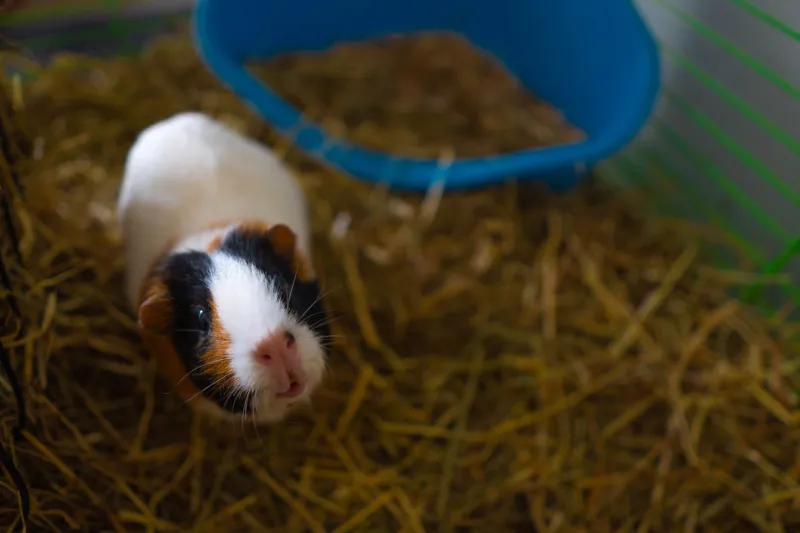
Cedar and pine shavings used as small-animal bedding. Compressed hay and straw bales stored in garages for rabbits, guinea pigs, and backyard chickens. Fleece cage liners, paper-based litters, and wood-pellet substrates. These are not fringe products. They occupy shelf space at every major pet retail chain in the country, and they share one characteristic that the packaging rarely mentions: virtually none of them are subject to mandatory federal flammability standards.
A Regulatory Blind Spot With Real Consequences
The Consumer Product Safety Commission (CPSC) maintains flammability requirements for a range of household goods — children's sleepwear, mattresses, upholstered furniture. Pet bedding and animal care substrates fall outside the scope of those regulations entirely. The American Pet Products Association reported that U.S. pet industry expenditures exceeded $147 billion in 2023, yet the regulatory framework governing the fire behavior of those products remains largely unchanged from decades prior.
Fire protection engineers note that this gap is not merely a bureaucratic oversight — it has measurable consequences for how fires behave in residential structures. "When you introduce a large volume of loose, fibrous, or cellulosic material into an enclosed space, you are fundamentally changing the fire dynamics of that space," explains the principle underlying what fire scientists call the fuel load problem. Loose bedding materials, particularly those derived from wood or plant fibers, present an enormous surface-area-to-mass ratio. That geometry is precisely what makes them ignite quickly and release heat rapidly.
In practical terms, a five-gallon bag of pine shavings stored in a garage alongside a space heater, a dryer vent, or an improperly stored heat lamp — common in setups for reptiles and backyard poultry — can transition from smoldering to fully involved fire in a fraction of the time a conventional fuel load would require.
The Hay Problem in Suburban America
Perhaps no single product category illustrates this hazard more starkly than hay and straw. Once confined primarily to agricultural settings, baled hay has migrated into suburban and even urban environments as the popularity of backyard chickens, pet rabbits, and small hobby livestock has grown substantially over the past decade. Many municipalities that once prohibited livestock now permit small flocks and enclosures within residential zones.
Hay is classified as a Class A combustible material. It is hygroscopic, meaning it absorbs and releases moisture from its environment, and under certain storage conditions it is capable of spontaneous combustion — a phenomenon in which microbial activity within improperly dried bales generates sufficient internal heat to trigger ignition without any external flame source. The National Fire Protection Association (NFPA) addresses hay storage extensively in agricultural fire codes, but those provisions were written for barns and farm structures, not attached garages in residential subdivisions.
Fire investigators report encountering hay and straw storage in attached garages with increasing frequency. An attached garage fire that involves a large quantity of hay can breach the fire-rated wall assembly separating the garage from the living space far more rapidly than a conventional garage fire involving tools, vehicles, or stored cardboard. The implication for egress time — the window occupants have to safely exit the structure — is significant.
Heat Lamps and High-Ignition Environments
The hazard is compounded when animal husbandry equipment enters the equation. Infrared heat lamps, widely used to warm brooding chicks, reptile enclosures, and newborn small animals, operate at surface temperatures that can exceed 500 degrees Fahrenheit. When these devices are suspended over or adjacent to combustible bedding — as they routinely are — the margin for error is narrow.
The NFPA has identified heat lamps as a contributing factor in numerous barn and residential fires. Extension cords, which are frequently used to power these devices in non-standard locations, introduce additional risk. Yet the combination of a heat lamp, an extension cord, and a substrate of loose wood shavings or straw remains entirely legal, commercially available, and widely practiced across the country.
Manufacturers of heat lamps do include warnings on their packaging, but those warnings are often generic and lack the specificity needed to communicate the actual ignition risk to consumers who may not have a background in fire behavior.
What Safer Practice Looks Like
Reducing the fire risk associated with pet care products does not require abandoning animal welfare. It requires substituting materials and practices with a more informed understanding of combustion behavior.
For small-animal bedding, paper-based substrates — while still combustible — generally present a lower ignition risk than loose wood shavings because their fiber structure is less conducive to rapid flame spread. Pelleted paper and cardboard-based litters also tend to have higher ignition temperatures than cedar or pine alternatives. Some manufacturers have begun marketing bedding products that incorporate fire-retardant treatments, though independent verification of those claims remains inconsistent.
For hay storage, quantity management is the most immediately actionable step. Storing only what is needed for a short period — rather than purchasing in bulk — meaningfully reduces the fuel load present in a structure at any given time. Hay that must be stored in quantity should be kept in a detached structure wherever possible, separated from the primary residence by the maximum practical distance.
Heat lamp installations warrant particular attention. Ceramic heat emitters, which produce infrared radiation without visible light and operate at lower surface temperatures than traditional incandescent heat lamps, represent a meaningful improvement for reptile and small-animal applications. Radiant panel heaters with thermostatic controls and tip-over shutoffs provide additional safety margins. Any heat source used in proximity to combustible bedding should be secured with a dedicated mount, never suspended from a cord, and connected directly to a properly rated wall outlet rather than an extension cord.
The Case for Updated Standards
Fire safety advocates have argued for years that the CPSC's mandate should extend to pet care products with documented combustibility concerns. The agency's existing framework for mattress flammability — which includes both open-flame and smoldering ignition tests — provides a reasonable model that could be adapted for animal bedding substrates. Voluntary industry standards, while preferable to no standards at all, have historically proven insufficient in product categories where consumer awareness of the underlying hazard is low.
The pet industry's growth trajectory suggests this is not a niche issue. Approximately 66 percent of U.S. households owned a pet as of 2023, according to the American Pet Products Association. A meaningful share of those households keep small animals, poultry, or reptiles that require the precise categories of bedding and heating equipment described here.
Until federal standards catch up to the realities of modern pet ownership, the burden of risk management falls on individual consumers — a position that fire safety professionals universally regard as suboptimal. Informed purchasing decisions, disciplined storage practices, and careful equipment selection can reduce exposure substantially. But they cannot substitute for the systemic protection that enforceable standards provide.
The materials that keep America's pets comfortable deserve the same scrutiny that this industry applies to every other combustible product in the home. The fire does not distinguish between a cedar shaving and a sofa cushion. Neither should the regulatory framework that governs them.