Transparent but Unyielding: The Case for Fire-Rated Glazing in the Modern American Workplace

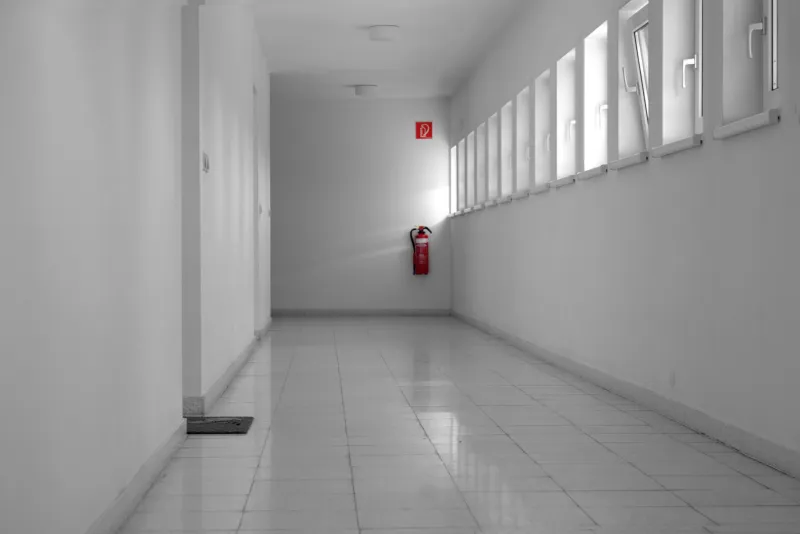
Photo by Photo by Bernd 📷 Dittrich on Unsplash on Unsplash
Glass has always carried a paradox in architectural design. It opens space, floods interiors with natural light, and signals transparency — values that modern office culture has embraced wholesale. But in a fire, conventional glass becomes a liability of the first order. It fractures within minutes of sustained heat exposure, collapses barriers that occupants depend on for evacuation time, and allows radiant heat to travel unchecked through what were supposed to be compartmentalized zones.
Fire-rated glazing resolves that paradox — at least in engineering terms. Whether the resolution reaches actual buildings is a different, more troubling story.
What Fire-Rated Glass Actually Does
The term "fire-rated glass" covers a spectrum of products with meaningfully different performance characteristics. At the foundational level, fire-resistive glazing is tested to remain intact under direct flame exposure for a rated duration — typically 20, 45, 60, or 90 minutes — without collapsing the barrier. This integrity rating prevents the passage of flames and hot gases, which is critical during the early phases of evacuation.
Beyond integrity, more advanced products carry an insulation rating, meaning they also limit the amount of radiant and conductive heat that passes through the glazed surface. This distinction matters enormously. A glass panel that holds together structurally but transmits 1,000°F of radiant heat to the other side offers limited practical protection to anyone standing near it. Insulated fire-rated glass — typically achieved through proprietary intumescent interlayers or multi-pane assemblies with gel-filled cores — addresses that secondary threat directly.
The underlying chemistry is sophisticated. Intumescent interlayers, for example, expand dramatically when exposed to heat, transforming from a clear film into an opaque, insulating foam barrier that absorbs energy and blocks radiation. Gel-core systems use a mineral-based compound that undergoes an endothermic reaction, absorbing heat and maintaining surface temperatures on the protected side at survivable levels.
The Regulatory Landscape and Its Limits
The International Building Code (IBC), adopted in some form by most U.S. jurisdictions, specifies where fire-rated assemblies — including glazed assemblies — are required in commercial construction. Stairwell enclosures, corridor walls, and exit access pathways in buildings above a certain occupancy threshold all carry prescriptive glazing requirements.
The gap, however, lies in the difference between minimum compliance and meaningful protection. Code requirements establish floors, not ceilings. A building may meet the letter of local fire code while using glazing products at the lowest performance tier that technically qualifies. In open-plan office environments — where the trend toward glass-walled conference rooms, transparent partitions, and floor-to-ceiling fenestration has accelerated over the past two decades — the distinction between compliant and protective becomes consequential.
Further complicating the picture is jurisdictional inconsistency. The IBC is a model code, and states and municipalities adopt it with varying amendments, timelines, and enforcement rigor. A building constructed in a jurisdiction with a lagging code adoption cycle may be operating under standards that are a full IBC edition behind — a gap that can represent years of performance improvements.
Why Buildings Still Install Standard Glass
The cost differential is real and should not be dismissed. Fire-rated glazing products, particularly those carrying both integrity and insulation ratings, command a significant price premium over conventional tempered or laminated glass. Depending on system specification and installation complexity, the premium can range from two to five times the cost of standard commercial glazing.
For developers operating on compressed margins, that delta is a line item that attracts scrutiny. When code compliance can be achieved with a lower-tier product, the business case for specifying up the performance ladder requires either a committed owner or a design team willing to make the argument explicitly. In many projects, neither condition is reliably present.
There is also a visibility problem. The performance difference between a 45-minute integrity-rated panel and a 60-minute insulated assembly is not apparent during a building tour, a lease negotiation, or a certificate of occupancy inspection. The gap only becomes measurable in an emergency — which is precisely when it is too late to address.
The Human Cost of the Compliance Gap
Evacuation modeling research consistently identifies the first minutes of a fire event as the period during which occupant outcomes are largely determined. Compartmentalization — the principle of using rated barriers to contain fire spread and preserve tenable egress routes — is the architectural mechanism that buys those minutes.
When glazed barriers fail prematurely, compartmentalization fails with them. Smoke migration accelerates. Radiant heat renders corridors impassable before occupants have cleared the floor. Emergency responders encounter conditions that have deteriorated faster than pre-incident planning anticipated.
Fire-rated glazing, properly specified and installed, extends the window during which evacuation remains viable. It is not a guarantee of survival — no single building component is — but it is a meaningful, measurable contributor to the probability of a positive outcome.
Specifying for Reality, Not Minimum Compliance
Architects, facility managers, and building owners who want to close the gap between code compliance and genuine protection have a practical path forward. It begins with understanding the specific occupancy risks of their space — floor plate size, occupant density, egress path geometry — and mapping those risks against glazing performance tiers.
Fire protection engineers, whose discipline sits at the intersection of life safety code and physical building performance, are an underutilized resource in this process. Engaging that expertise during the design phase, rather than at permit review, creates the conditions for informed specification decisions before costs are locked.
The industry has also developed tested and listed glazing systems that achieve high performance ratings without the aesthetic compromises that once characterized fire-rated products. Modern fire-rated glass is optically clear, available in large-format sizes, and compatible with the frameless or minimally framed aesthetics that contemporary office design demands.
The Bottom Line
The modern American office has embraced transparency as a design value. The engineering now exists to make that transparency durable under the conditions that matter most. The barrier to adoption is not technical — it is economic and organizational, rooted in the gap between minimum compliance and meaningful protection.
Closing that gap requires building owners and tenants to ask harder questions during construction and renovation: not just whether glazing is code-compliant, but whether it is actually protective. In a building where glass is everywhere, the answer to that question should be something more than "technically, yes."