The Roof Over Your Head Is a Fire Risk: What Homeowners Need to Know Before the Next Wildfire Season
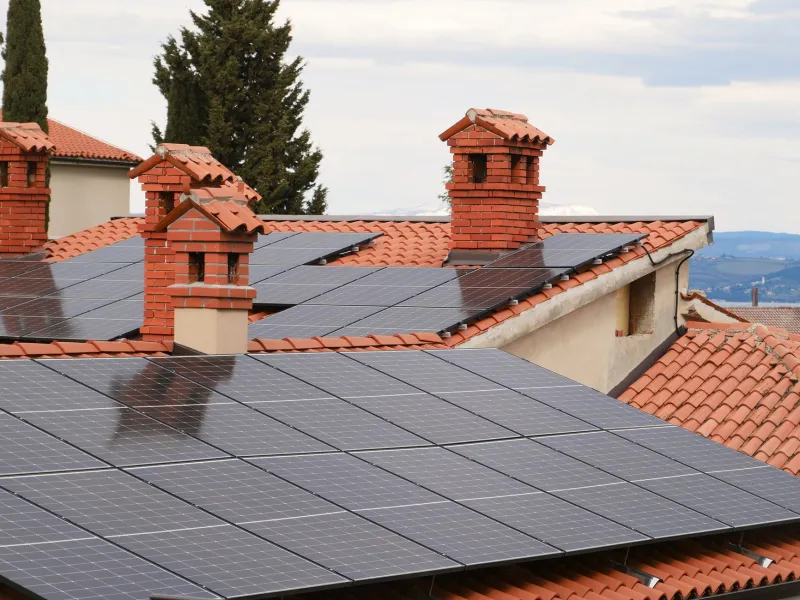
When a wildfire advances on a residential neighborhood, the flame front itself is rarely the first thing to arrive. Embers—burning fragments of wood and vegetation carried aloft by convective winds—can travel two miles or more ahead of active fire, landing on rooftops, in gutters, and against exterior walls minutes or hours before the blaze reaches the street. What happens when those embers land depends, in large measure, on what the roof is made of.
For approximately 75 percent of American single-family homes, the answer to that question is asphalt shingles. And that answer, according to fire engineers and insurance actuaries alike, is increasingly inadequate.
Understanding the Ember Problem
The mechanism by which most homes ignite during wildfires is not direct flame contact. Research conducted by the Insurance Institute for Business and Home Safety, as well as independent studies from the University of California's Fire Research Division, has consistently demonstrated that ember ignition is responsible for the majority of structure losses in wildland-urban interface fires.
Asphalt shingles are particularly susceptible to this ignition pathway. Standard three-tab and architectural shingles are composed of a fiberglass or organic mat base coated with asphalt and surfaced with mineral granules. As shingles age—typically beyond fifteen years—the granule layer degrades, the asphalt oxidizes, and the material's resistance to sustained ember contact diminishes substantially. Embers that lodge in the crevices between shingles, in valleys, or in the transition zones around penetrations such as chimneys and vents can sustain ignition for long enough to compromise the underlying deck.
This is not a hypothetical risk profile. Post-fire surveys conducted following major California wildfires, including the 2018 Camp Fire and the 2021 Caldor Fire, documented roofing material as a primary factor in the differential survival rates between adjacent properties.
The Class Rating System Explained
The fire resistance of roofing materials in the United States is governed by ASTM International standards, with the resulting classifications—Class A, B, and C—representing the primary framework homeowners and contractors should understand.
Class A materials offer the highest resistance to severe fire exposure, providing protection against flame spread, fire penetration, and burning brand ignition. Class B and C ratings represent progressively lower performance thresholds. Standard asphalt shingles, depending on their age and specific composition, may be rated Class A when new—but that rating assumes the product is tested in isolation, installed correctly, and maintained in acceptable condition. The real-world performance of aged, improperly installed, or granule-depleted shingles frequently falls well below the tested standard.
Moreover, the Class A designation applies to the roofing assembly, not the shingle alone. An improperly ventilated attic, a deteriorated underlayment, or a combustible deck material can render a Class A shingle installation functionally non-compliant from a fire-resistance standpoint.
Fire-Rated Alternatives: A Material Comparison
Metal Roofing
Standing-seam and metal tile roofing systems are among the most fire-resistant options available to American homeowners. Steel and aluminum roofing carries a Class A rating and, unlike asphalt, does not degrade in a manner that compromises fire performance over time. Metal roofing reflects radiant heat rather than absorbing it, and its non-combustible surface provides no fuel for sustained ember ignition.
The primary objection historically raised against metal roofing—cost—has softened considerably as material and installation prices have converged toward parity with premium architectural shingles over a comparable service life. Metal roofing systems are typically warranted for forty to fifty years, versus fifteen to twenty-five for asphalt, a differential that substantially alters the cost-per-year calculus for homeowners planning to remain in their properties long-term.
Concrete and Clay Tile
Concrete and clay tile roofing is prevalent in the Southwest and carries a strong fire-resistance profile. Both materials are inherently non-combustible and, when properly installed with appropriate underlayment systems, achieve Class A assembly ratings. The elevated installation weight requires structural assessment prior to retrofit application, and the material's brittleness presents maintenance considerations, but from a fire-resistance standpoint, tile roofing performs reliably.
Composite and Synthetic Roofing
A newer category of fire-rated roofing products—composite or synthetic tiles manufactured from rubber, plastic, and polymer compounds—has expanded significantly in recent years. Products from manufacturers including DaVinci Roofscapes and CertainTeed's Landmark series offer Class A ratings alongside design profiles that replicate the aesthetic of wood shake or slate at lower weight and cost. These materials have attracted considerable attention in communities where homeowners' association covenants restrict the use of metal or tile but where fire risk is high.
Regional Vulnerability and the Insurance Equation
The geographic distribution of wildfire risk across the United States is not uniform, but the wildland-urban interface—the zone where residential development meets undeveloped or minimally managed vegetation—now encompasses communities in nearly every western state, as well as portions of Texas, Florida, and the mid-Atlantic region.
Insurance carriers have responded to this expanding risk landscape with a combination of premium increases, coverage restrictions, and, in some cases, outright withdrawal from high-risk markets. Several major insurers operating in California, Colorado, and Oregon have implemented underwriting guidelines that explicitly reward fire-resistant roofing upgrades with reduced premiums or expanded coverage availability. State Farm, Farmers, and a number of regional carriers have published documentation indicating that Class A roofing systems—particularly metal and tile—can qualify properties for meaningful premium reductions in wildfire-designated zones.
For homeowners facing roofing replacement decisions, this insurance dynamic deserves explicit incorporation into the financial analysis. The incremental cost of upgrading from standard architectural shingles to a metal or composite Class A system may be partially or substantially offset by multi-year premium savings, particularly in high-risk ZIP codes.
What Homeowners Should Actually Do
The practical guidance that emerges from fire engineering research and insurance industry data is more actionable than most homeowners expect.
First, assess age and condition. Any asphalt roof older than fifteen years warrants professional inspection with specific attention to granule loss, shingle cracking, and valley integrity—the areas most vulnerable to ember accumulation. Second, address the assembly, not just the surface. Replacing shingles without evaluating underlayment condition, attic ventilation, and deck integrity leaves meaningful fire vulnerability in place. Third, consult with both a roofing contractor and a homeowner's insurance representative before specifying replacement materials—the premium implications of material choices are increasingly significant.
The roof is the largest single surface area exposed to ember cast during a wildfire event. It is, in the most direct sense, the first line of structural defense. Treating it as such—rather than as a cosmetic or routine maintenance decision—is the perspective that fire-resilient homeownership demands.