Spending Smart Against Fire: A Rigorous Look at Which Home Safety Upgrades Actually Reduce Risk
A homeowner in Phoenix recently spent just over $14,000 upgrading her property's fire-safety profile before the 2023 wildfire season. The investment included impact-resistant windows, a whole-home fire suppression system expansion, ember-resistant vent covers, a Class A metal roof, and a set of intumescent door seals throughout the interior. Her contractor assured her the property was now "as protected as it could be."
Six months later, a fire protection consultant reviewing her insurance documentation identified two significant gaps: her garage door—the largest single opening in the structure—had no ember-resistant treatment, and her attached deck used combustible composite decking within three feet of the home's exterior wall. Both represent high-probability ignition pathways in her regional fire environment. Neither was addressed by her $14,000 investment.
This kind of mismatch between expenditure and actual risk reduction is common. The residential fire-safety retrofit market has grown substantially alongside rising wildfire risk and heightened consumer awareness, but it lacks the transparent, comparative data that would allow homeowners to allocate resources rationally. What follows is an evidence-based assessment of the most widely marketed retrofit options, ranked by their documented impact on fire risk relative to cost and installation complexity.
High-Impact, High-Value Upgrades
Ember-Resistant Vent Covers
Of all the exterior retrofit options available to homeowners in wildfire-prone regions, replacing standard foundation and soffit vents with ember-resistant models consistently delivers among the highest risk-reduction returns per dollar spent. Post-fire forensic analyses—including studies conducted after the 2018 Camp Fire and the 2021 Marshall Fire—have identified vent intrusion as a primary ignition pathway in a substantial proportion of structure losses.
Ember-resistant vents conforming to California's Building Code Section 705A standards, which require vents to resist ember penetration and flame impingement, are available for between $20 and $60 per unit. Whole-home vent replacement for a typical single-family residence typically runs between $800 and $2,500 installed. The IBHS rates this upgrade as among the most cost-effective single measures available for WUI-zone homes.
Interconnected Multi-Sensor Smoke Detection
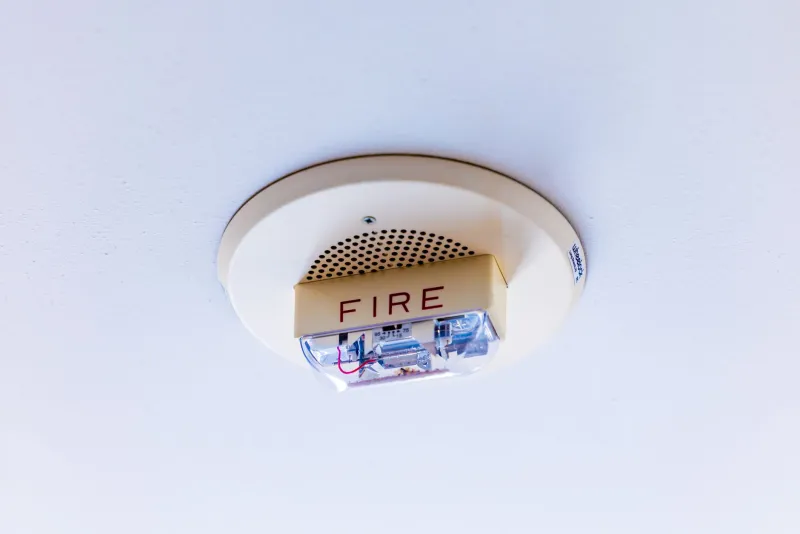
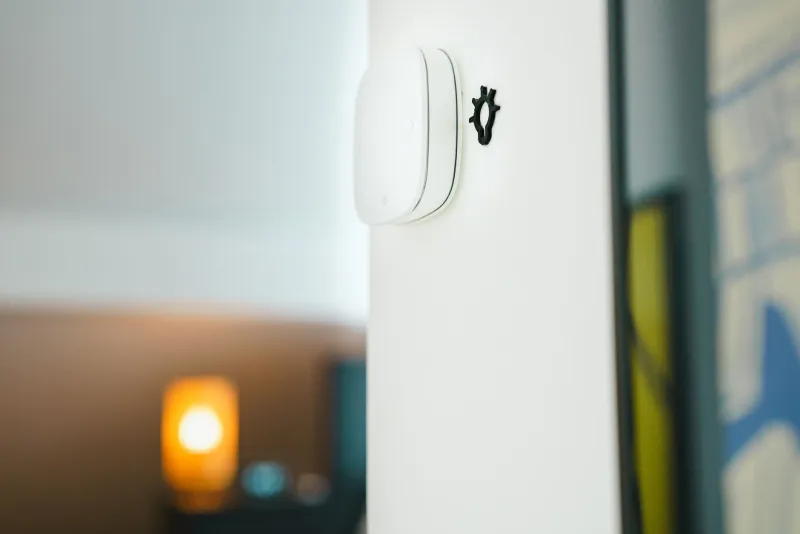
Replacing isolated, single-technology smoke detectors with interconnected multi-sensor units—devices that combine photoelectric, ionization, and carbon monoxide detection in a single unit—addresses multiple failure modes simultaneously. The NFPA reports that three of every five home fire deaths occur in homes without working smoke alarms, or in homes where alarms failed to activate. Interconnected systems ensure that activation of any single unit sounds all units throughout the structure.
Modern interconnected detector systems, including those that integrate with smart home platforms for remote monitoring, range from $30 to $90 per unit. A comprehensive installation for a mid-sized home typically costs between $400 and $1,200. Given the life-safety impact of reliable early detection, this upgrade consistently ranks at the top of risk-reduction analyses.
Class A Roofing Materials
The roof is the most exposed surface on a structure and, in ember-generating fire environments, one of the most critical ignition points. Class A roofing—the highest fire-resistance rating under ASTM E108 testing—includes metal roofing, concrete and clay tile, and certain asphalt composite products. Studies by the Insurance Institute for Business and Home Safety have documented significant reductions in ember ignition probability for Class A roofing compared to lower-rated materials.
The cost differential between Class A and lower-rated roofing is most significant when replacing asphalt shingles with metal or tile. Metal roofing installations typically run between $10,000 and $20,000 for a standard single-family home, representing a substantial upfront investment. However, metal roofing also carries a service life two to three times longer than standard asphalt shingles, and many insurers in high-risk states offer measurable premium reductions for Class A roofing upgrades.
Moderate-Impact Upgrades With Variable Returns
Multi-Pane, Fire-Rated Windows
Windows represent a vulnerability in fire events both as ignition points under radiant heat exposure and as failure points that allow fire gases and embers to enter a structure. Multi-pane windows with tempered or fire-rated glass perform significantly better than single-pane models under radiant heat exposure. However, the risk-reduction benefit of window upgrades is highly dependent on regional fire environment: in ember-dominated WUI scenarios, windows are a secondary risk relative to vents and deck surfaces. In urban interface scenarios involving direct radiant heat from adjacent burning structures, upgraded windows offer more meaningful protection.
Window replacement costs vary widely based on unit size and specification, typically ranging from $400 to $1,200 per window installed. For homeowners in high-density urban or suburban environments where structure-to-structure radiant heat is a plausible threat, this upgrade merits prioritization. For homeowners whose primary risk is ember transport from wildland fires, vent and deck upgrades will generally deliver higher risk reduction per dollar.
Intumescent Door Seals and Fire-Rated Door Hardware
Intumescent seals, which expand under heat to block the passage of smoke and flame around door frames, are a well-established technology in commercial fire protection. Their residential application is less uniformly adopted. For homes with interior fire-rated doors between attached garages and living spaces—a configuration the IRC requires in new construction—intumescent seals and self-closing hardware represent a low-cost enhancement to an already-required assembly. Costs per door typically range from $50 to $200 for materials, with minimal installation complexity.
The limitation of this upgrade is its scope: it addresses fire spread within an already-ignited structure rather than preventing initial ignition. It is most valuable as a complement to a broader protection strategy rather than as a standalone measure.
Lower-Priority or Overhyped Options
Portable Fire Extinguishers (as a primary investment)
Portable extinguishers are a legitimate and inexpensive component of a residential fire-safety kit. They are not, however, a meaningful structural protection measure, and their marketing frequently overstates their practical utility. Research consistently shows that residential extinguishers are most effective in the first 30 seconds of a small, contained fire—a scenario that represents a minority of fire events that cause significant property loss. Homeowners who invest in extinguisher upgrades as a primary fire-safety expenditure while deferring detector or vent improvements are allocating resources poorly relative to risk.
Decorative Fire-Resistant Landscaping Products
A category of fire-resistant mulch and ground cover products has emerged in the consumer market, promising reduced ignition risk from ember deposition in garden beds. While fire-resistant mulch does perform better than standard wood mulch in controlled testing, the most effective measure for ember-zone protection remains eliminating combustible mulch entirely within five feet of a structure's foundation and replacing it with non-combustible rock or gravel. The cost differential between fire-resistant mulch and rock ground cover is minimal; the risk-reduction difference is significant.
The Audit-First Principle
The most consistent finding across fire protection research is that retrofit spending is most effective when preceded by a structured vulnerability assessment rather than a product-driven purchasing decision. Many state forestry agencies and fire departments offer free or low-cost home hardening assessments for residents in designated WUI zones. The IBHS's Wildfire Prepared Home program provides a structured evaluation framework accessible to homeowners nationwide.
Spending $500 on a professional assessment before committing to a $10,000 retrofit program is not a delay of protection—it is the foundation of protection that actually holds.