Beyond the Beep: How Outdated Smoke Detectors Are Losing the Battle Against Silent, Smoldering Fires
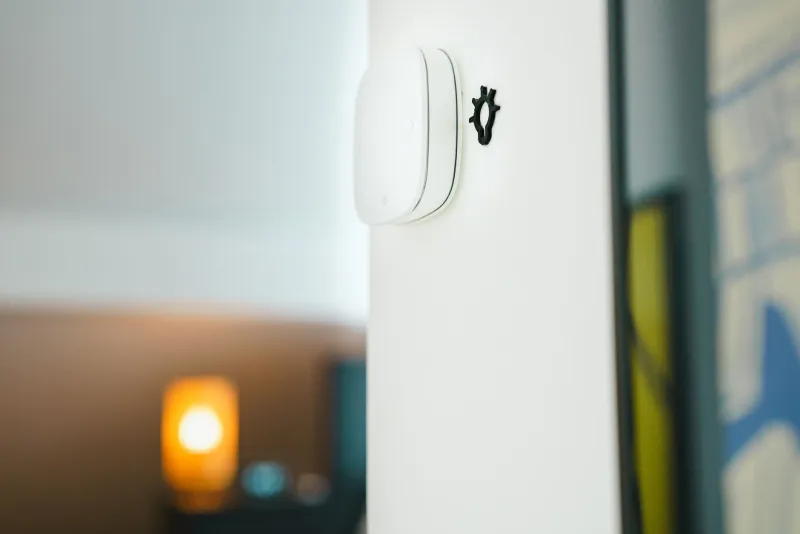
For decades, the smoke detector mounted to the ceiling of the average American bedroom has represented a kind of technological covenant: a small plastic disc promising that danger would never arrive unannounced. That promise, it turns out, is more conditional than most homeowners realize.
The United States Fire Administration estimates that roughly three out of five home fire deaths occur in properties with no working smoke alarms—or in homes where the installed detectors simply failed to trigger in time. That second category is the one that deserves far more scrutiny than it typically receives.
The Chemistry of a Silent Killer
Conventional residential smoke detectors fall into two dominant types: ionization and photoelectric. Ionization units, which account for the majority of installed devices in American homes, use a small amount of radioactive material to ionize air within a sensing chamber. When combustion particles interrupt that ionization, the alarm triggers. Photoelectric detectors, by contrast, use a light beam that, when scattered by smoke particles, activates the alert.
Both technologies perform reasonably well under certain conditions. The problem lies in what fire safety professionals call smoldering fires—slow, oxygen-limited combustion events that can burn for hours inside walls, beneath floorboards, or within upholstered furniture before producing the particle density required to activate either sensor type.
"A smoldering fire in a couch or a wall cavity can produce carbon monoxide and toxic gases at lethal concentrations long before it generates visible smoke," explained one regional fire marshal who consults with residential builders in the Pacific Northwest. "By the time a conventional detector sounds, the occupants may already be incapacitated."
This is not a fringe scenario. The National Fire Protection Association's data consistently shows that upholstered furniture and mattresses are among the leading contributors to home fire fatalities—precisely because the combustion patterns these materials produce are poorly matched to legacy detection thresholds.
Electrical Fires: The Threat Behind the Wall
Smoldering upholstery is visible, at least eventually. Electrical faults are not. A failing wire connection or an overloaded circuit breaker can arc repeatedly inside a wall cavity for days or weeks, slowly charring insulation and structural wood, before any outward sign manifests. Conventional smoke detectors positioned on ceilings several feet away from such events are functionally blind to them until conditions have already escalated beyond the point of easy intervention.
The Consumer Product Safety Commission has documented thousands of residential fires annually that originate from electrical faults in concealed spaces—attics, wall voids, and junction boxes. In many of these cases, post-incident analysis reveals that installed smoke detectors were functional and code-compliant, yet provided no advance warning.
A New Generation of Detection
The inadequacy of single-sensor detection has driven meaningful innovation across the fire safety technology sector, and several emerging approaches are beginning to find their way into American residential and commercial markets.
Multi-Criteria Sensor Fusion
Rather than relying on a single detection principle, multi-criteria detectors combine ionization or photoelectric smoke sensing with carbon monoxide detection, heat measurement, and in some cases humidity monitoring. By requiring corroboration across multiple sensor inputs before triggering an alarm, these systems dramatically reduce false positives—a persistent problem that causes occupants to disable detectors—while simultaneously catching the slow, low-smoke events that single-sensor devices miss.
Air Quality and Volatile Organic Compound Monitoring
Some of the most promising detection platforms entering the residential market do not function as smoke detectors in any traditional sense. Instead, they continuously monitor the chemical composition of indoor air, flagging elevated concentrations of carbon monoxide, nitrogen dioxide, and volatile organic compounds that are characteristic of early-stage combustion events. Companies including Airthings and Kidde have introduced consumer-grade devices that integrate this kind of environmental sensing with smartphone alerting, providing warnings that precede visible smoke generation by meaningful margins.
Thermal Imaging Integration
At the higher end of the market—and increasingly in commercial and industrial applications—thermal imaging cameras are being deployed as continuous fire detection tools. Unlike conventional point detectors, thermal cameras can identify anomalous heat signatures across large areas, including within wall assemblies when deployed alongside thermal-transparent inspection panels. While the cost profile of these systems currently limits their residential penetration, several manufacturers are working toward consumer-accessible thermal sensor arrays that could realistically integrate with existing smart home platforms.
AI-Powered Pattern Recognition
Perhaps the most consequential development in fire detection technology is the application of machine learning to sensor data interpretation. Traditional detectors operate on fixed thresholds: when particle density or temperature exceeds a preset value, the alarm triggers. AI-driven systems, by contrast, learn the baseline environmental signature of a specific space over time and flag deviations that pattern-match to known pre-fire conditions—even when no individual sensor reading crosses a conventional alarm threshold.
Nest's Protect smoke and CO detector has incorporated some degree of algorithmic analysis for several years, but more sophisticated implementations are emerging from startups including Halo Smart Labs and Lüft, whose systems aggregate environmental data streams and apply trained models to distinguish genuine early-fire signatures from cooking smoke or shower steam.
What Fire Marshals Are Actually Recommending
Fire safety officials interviewed for this article were consistent in one observation: the single most impactful change most American homeowners could make is replacing aging ionization-only detectors with combination photoelectric-and-CO units—a step that addresses the smoldering fire gap at relatively modest cost. The NFPA recommends replacing any smoke alarm older than ten years regardless of apparent function, a guideline that an estimated 40 percent of American households are currently not meeting.
Beyond that baseline, officials expressed enthusiasm for smart detection platforms that provide remote monitoring and occupant notification, particularly for households with elderly or mobility-limited residents who may be less able to respond rapidly to an alarm.
The Compliance Gap
One friction point that fire safety advocates consistently raise is the lag between available technology and adopted building codes. Many jurisdictions continue to permit installation of ionization-only detectors in new residential construction, even as the research case for photoelectric or multi-criteria alternatives has grown substantially. California and a small number of other states have moved to mandate combination detectors in certain applications, but national standards have not yet caught up.
For homeowners who do not wish to wait for regulatory action, the practical path forward is straightforward: audit the age and type of every installed detector, replace units older than a decade, and evaluate the growing range of smart, multi-sensor platforms that offer detection capabilities meaningfully beyond what a 1990s-era ionization disc can provide.
The beep was never the point. The point was always what came before it—and increasingly, the technology exists to hear that much earlier warning. The question is whether American households are listening.


