Charged With Risk: The Growing Fire Danger Sleeping on Your Nightstand Every Night
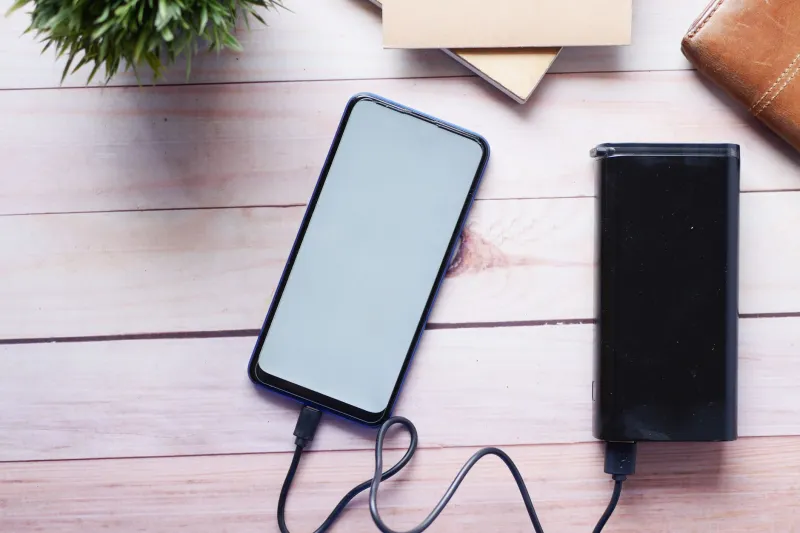
Every evening, across tens of millions of American bedrooms, the same ritual plays out: a smartphone is plugged in, set on the nightstand, and forgotten until morning. It is a habit so ordinary that questioning it feels almost absurd. Yet fire investigators, materials engineers, and consumer safety agencies have spent the better part of a decade documenting a troubling pattern—one in which that unremarkable nightly routine occasionally ends in smoldering bedding, structural damage, or worse.
The culprit is not carelessness in any traditional sense. It is, instead, the quiet convergence of aggressive charging technology, an unregulated accessories market, and a fundamental misunderstanding among consumers about how lithium-ion batteries actually behave under stress.
The Chemistry of Catastrophe
To appreciate the fire risk embedded in a modern smartphone, it helps to understand what is happening inside the battery itself. Lithium-ion cells generate electrical energy through the controlled movement of lithium ions between a cathode and an anode, separated by a thin permeable membrane and immersed in a flammable liquid electrolyte. Under normal operating conditions, this process is stable and well-managed by onboard battery management systems.
The danger emerges when that stability is disrupted—a condition engineers call thermal runaway. It can be triggered by several factors: physical damage to the cell casing, manufacturing defects that allow internal short circuits, overcharging beyond the cell's voltage threshold, or sustained exposure to high ambient temperatures. Once initiated, thermal runaway is self-reinforcing. Heat accelerates the chemical reactions, which generate more heat, which accelerates the reactions further. The flammable electrolyte can vaporize and ignite, and the resulting fire burns intensely and is difficult to extinguish with conventional methods.
What makes this particularly concerning in a residential context is the speed at which the process unfolds. From the first detectable temperature spike to open flame, the window can be measured in seconds rather than minutes—leaving occupants with little time to respond, especially during sleep.
Fast Charging: Convenience at a Cost
The proliferation of fast-charging standards has added a new layer of complexity to an already delicate system. Manufacturers including Apple, Samsung, and Qualcomm have each developed proprietary fast-charging protocols that push significantly higher wattage through a device than conventional chargers. A standard 5-watt charger might take two hours to fully charge a modern smartphone; a 65-watt fast charger can accomplish the same task in under thirty minutes.
This acceleration is not without consequence. Higher charging rates generate more heat within the cell, and managing that heat requires sophisticated coordination between the charger, the cable, and the device's battery management system. When that coordination breaks down—as it does when an incompatible charger is used—the results can be severe.
The U.S. Consumer Product Safety Commission has documented numerous incidents in which smartphones charged with non-original or counterfeit accessories overheated and caught fire. In some cases, the devices involved were not particularly old or damaged; the failure was introduced entirely through the charging accessory. Counterfeit chargers, often visually indistinguishable from genuine products, frequently lack the voltage regulation circuitry that prevents overcharging, the thermal cutoffs that halt charging when temperatures rise, and the communication protocols that allow the charger and device to negotiate safe power delivery.
The Counterfeit Accessory Problem
The scale of the counterfeit electronics accessory market in the United States is difficult to overstate. Customs and Border Protection seizures routinely include tens of thousands of counterfeit charging cables and power adapters in a single enforcement action. Many of these products enter the country through third-party online marketplace listings, where they are sold alongside—and sometimes deliberately confused with—genuine manufacturer accessories.
For consumers, the practical challenge is identification. Counterfeit chargers have become increasingly sophisticated in their mimicry. Logos, packaging, and even holographic security labels are replicated with sufficient accuracy to deceive all but the most attentive buyer. The internal engineering, however, tells a different story. Independent testing by safety researchers has repeatedly found that counterfeit chargers omit critical safety components, use substandard insulation, and operate at voltage tolerances far wider than those specified by legitimate manufacturers.
The safest approach is to purchase charging accessories exclusively through manufacturer-authorized retailers or directly from the device maker. Price is an imperfect but useful signal: a USB-C fast charger sold for three dollars is almost certainly not equipped with the safety circuitry that a legitimate equivalent requires.
Aging Batteries and the Risk Accumulation Curve
New devices are not the only concern. Lithium-ion batteries degrade with each charge cycle, and that degradation is not uniform. Over time, microscopic structures called lithium dendrites can form inside the cell, eventually penetrating the separator membrane and creating internal short circuits. Swelling—visually evident as a bulging battery or a device whose back panel no longer sits flat—is a reliable indicator that a battery has reached or exceeded a safe service threshold.
Industry guidance generally places the practical service life of a lithium-ion battery at two to three years of regular use, though actual degradation rates vary considerably depending on charging habits, temperature exposure, and discharge depth. Americans who continue using smartphones for four or five years—a practice that has become more common as device prices have risen—may be operating batteries that have accumulated significant internal damage without any obvious external indication.
Device manufacturers offer battery health diagnostics through system settings menus, and several third-party applications provide more granular data. Any battery reporting capacity below eighty percent of its original rating warrants attention; a battery exhibiting physical deformation should be treated as a fire hazard and replaced immediately through a certified service provider.
Protective Measures for the American Household
The engineering risks described above are real, but they are also manageable. Several straightforward practices can meaningfully reduce the probability of a charging-related fire in a residential setting.
Charge outside the bedroom. Charging a device in a kitchen, living room, or dedicated charging station in a hallway keeps any potential ignition event away from sleeping occupants and from the soft furnishings—mattresses, pillows, blankets—that accelerate fire spread.
Avoid overnight charging on soft surfaces. Smartphones and tablets left charging on beds or upholstered furniture are particularly vulnerable because these surfaces trap heat and can ignite more readily than hard surfaces. A hard, non-flammable surface—a ceramic tile, a wooden desk, a metal charging tray—is a safer resting point.
Use only certified accessories. Look for chargers and cables bearing UL, ETL, or CSA certification marks, which indicate that the product has been tested against recognized safety standards. These marks are not a guarantee of perfection, but they represent a meaningful baseline of quality control.
Install smoke detection near charging areas. Standard photoelectric smoke detectors respond to the smoldering phase that often precedes open-flame fires. Placing a detector in close proximity to household charging stations—whether in a hallway, kitchen, or home office—can provide critical early warning.
Consider a fireproof charging bag. Lithium-ion fire containment pouches, originally developed for hobbyist drone and RC vehicle batteries, are now marketed for consumer electronics and are available from several reputable manufacturers. These bags do not prevent thermal runaway, but they are designed to contain the fire and gases produced during an event, buying time for evacuation and emergency response.
A Risk Worth Taking Seriously
The smartphone has become as essential to American daily life as the automobile or the kitchen appliance—and, like those technologies, it carries risks that deserve informed attention rather than dismissal. The vast majority of charging events will never produce a fire. But the consequences when they do are serious enough, and the protective measures available straightforward enough, that complacency is difficult to justify.
Building a safer relationship with consumer electronics begins with understanding what is actually happening inside those sleek, familiar devices—and making deliberate choices about where, when, and how we charge them.