What's Behind Your Drywall Could Kill You: The Insulation Fire Crisis No One Is Talking About
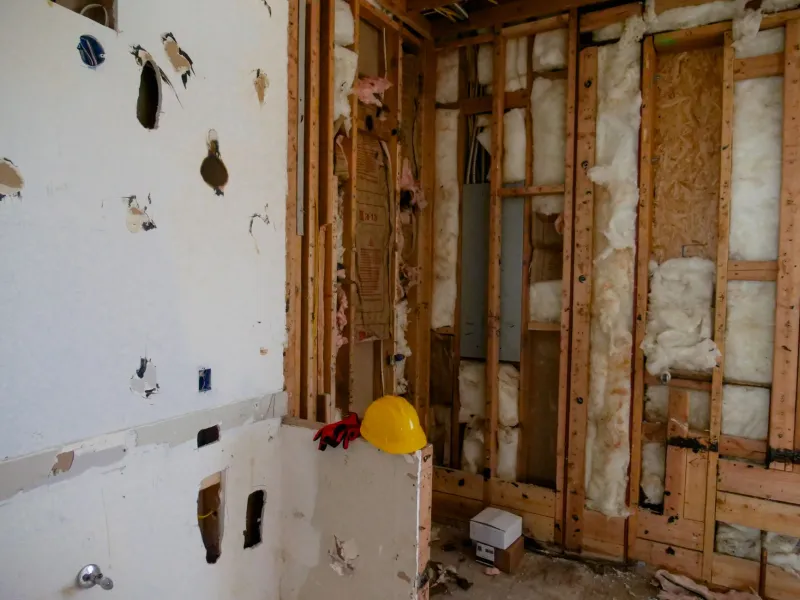
The walls of your home are supposed to protect you. They keep out the cold, muffle sound, and — in theory — slow the spread of fire long enough for you to escape and for firefighters to respond. That last function, however, is increasingly coming under scrutiny. Across the United States, the insulation materials filling residential wall cavities are being reexamined not as passive safety components, but as potential accelerants waiting for the right conditions.
The problem is not new. But the scale at which it is now being recognized — driven by faster-burning modern construction, shifting climate patterns, and a surge in wildfire-adjacent residential development — has pushed the conversation from academic fire science into urgent public safety territory.
The Code Gap: What Passes Inspection and What Survives a Fire
American residential construction is governed by a patchwork of building codes, most of which derive from the International Residential Code (IRC) and International Building Code (IBC). These standards specify minimum fire-resistance ratings for wall assemblies, typically measured through standardized tests such as ASTM E119, which exposes assemblies to controlled furnace conditions.
The problem with these tests is not that they are fraudulent — it is that they are incomplete. Laboratory furnace conditions do not replicate the radiant heat dynamics, oxygen fluctuations, or chemical interactions present in an actual residential fire. Materials that perform adequately in a furnace test may behave very differently when flames are driven by a burst gas line, accelerated by synthetic furnishings, or fed by the stack effect of an open floor plan.
Expanded polystyrene (EPS) and extruded polystyrene (XPS) foam boards — both widely used in residential construction for their cost-effectiveness and thermal performance — are among the most scrutinized. When exposed to fire, these petroleum-derived materials do not simply resist combustion; they melt, drip, and in many cases ignite, releasing dense black smoke laden with toxic compounds including styrene and carbon monoxide. Spray polyurethane foam (SPF), another common choice, presents similar concerns when left without an adequate thermal barrier covering.
Current codes do require that foam plastics be covered by a thermal barrier — typically half-inch gypsum drywall — to limit flame spread. In practice, however, this requirement is not always enforced with consistency, particularly in renovation work, crawl spaces, and attic installations where inspection access is limited.
The Real-World Performance Problem
Fire investigators and structural engineers have increasingly documented cases where insulation materials contributed to faster fire progression than building code compliance would suggest. The National Fire Protection Association (NFPA) has noted in multiple reports that modern homes burn significantly faster than homes built several decades ago — a phenomenon attributable in part to the prevalence of synthetic materials in both furnishings and structural components.
In legacy construction, older fiberglass batt insulation presented its own limitations but was largely non-combustible. The shift toward foam-based products, driven by energy efficiency mandates and tightening building envelope standards, has introduced a new variable into the fire equation. Builders and developers have embraced these materials because they perform exceptionally well on energy audits. Their fire behavior under real conditions, however, is a different calculation entirely.
The gap between code compliance and actual fire resilience is what safety researchers refer to as the "performance gap" — a space where a building can pass every required inspection and still fail catastrophically when exposed to a genuine fire event.
Emerging Solutions: Thermal Barrier Technologies Designed for Reality
The construction and materials industries are not standing still. A new class of thermal barrier products has entered the market specifically designed to address the limitations of conventional insulation fire protection.
Among the most promising developments are intumescent coatings — materials that expand dramatically when exposed to heat, forming an insulating char layer that slows heat transfer and suppresses flame spread. Originally developed for industrial and commercial steel protection, intumescent technology is now being adapted for residential applications, including spray-applied coatings that can be retrofitted over existing foam insulation in attics and crawl spaces.
Mineral wool insulation — composed of spun basalt rock or industrial slag — has also seen renewed interest as a non-combustible alternative to foam products. Unlike polystyrene or polyurethane, mineral wool does not melt or ignite; it retains its structural integrity at temperatures exceeding 1,800 degrees Fahrenheit. Several major manufacturers have expanded their residential mineral wool product lines in response to growing demand from fire-conscious builders and homeowners in high-risk regions.
Aerogel-based insulation panels represent a further frontier. Though currently priced at a premium that limits widespread residential adoption, aerogel composites offer exceptional thermal resistance without the combustibility profile of petroleum-based foams. Ongoing manufacturing refinements are expected to bring costs down over the next decade.
Regulatory Resistance and the Retrofit Challenge
Despite the availability of superior alternatives, the path to broader adoption remains obstructed. Building codes are updated on a cycle that often lags behind material science by years, sometimes decades. The IRC and IBC are revised every three years, but individual states and municipalities are not required to adopt updated editions — and many do not. As of the most recent survey data, a significant number of US states are operating under code editions that are one or more cycles behind the current standard.
Industry lobbying also plays a role. Manufacturers of conventional foam insulation products have substantial financial interests in maintaining current code language, and trade associations have historically resisted amendments that would impose stricter fire performance requirements on their product categories.
For existing homeowners, the retrofit challenge is considerable. Replacing installed insulation is invasive and expensive, often requiring the removal of finished wall surfaces. Intumescent spray coatings offer a less disruptive alternative in accessible spaces, but they do not address insulation already sealed within closed wall cavities.
Some fire safety advocates have proposed mandatory disclosure requirements — similar to lead paint disclosure laws — that would require sellers of older homes to disclose the type and condition of insulation materials present. Such measures have gained little legislative traction thus far, though awareness is growing among real estate professionals in wildfire-prone states including California, Colorado, and Oregon.
What Homeowners Can Do Now
Waiting for regulatory action is not a viable safety strategy. Homeowners who are concerned about the fire performance of their insulation have several practical options available today.
A qualified home energy auditor or fire safety consultant can assess accessible insulation installations and identify areas of elevated risk, particularly in attics, garages, and crawl spaces. Where foam insulation is present without an adequate thermal barrier covering, remediation options — including the application of intumescent coatings or the installation of additional gypsum board layers — can meaningfully reduce risk.
For homeowners undertaking renovations, specifying mineral wool or other non-combustible insulation alternatives in any work that opens wall cavities represents a straightforward upgrade with lasting safety benefits.
The walls of your home are engineered to protect you. Ensuring that what is inside them is actually capable of doing so is no longer a question that can be deferred to the next inspection cycle. In an era of faster-burning homes and increasingly severe fire conditions, the insulation behind your drywall deserves the same scrutiny as any other life-safety system in your house.


